EN
EN

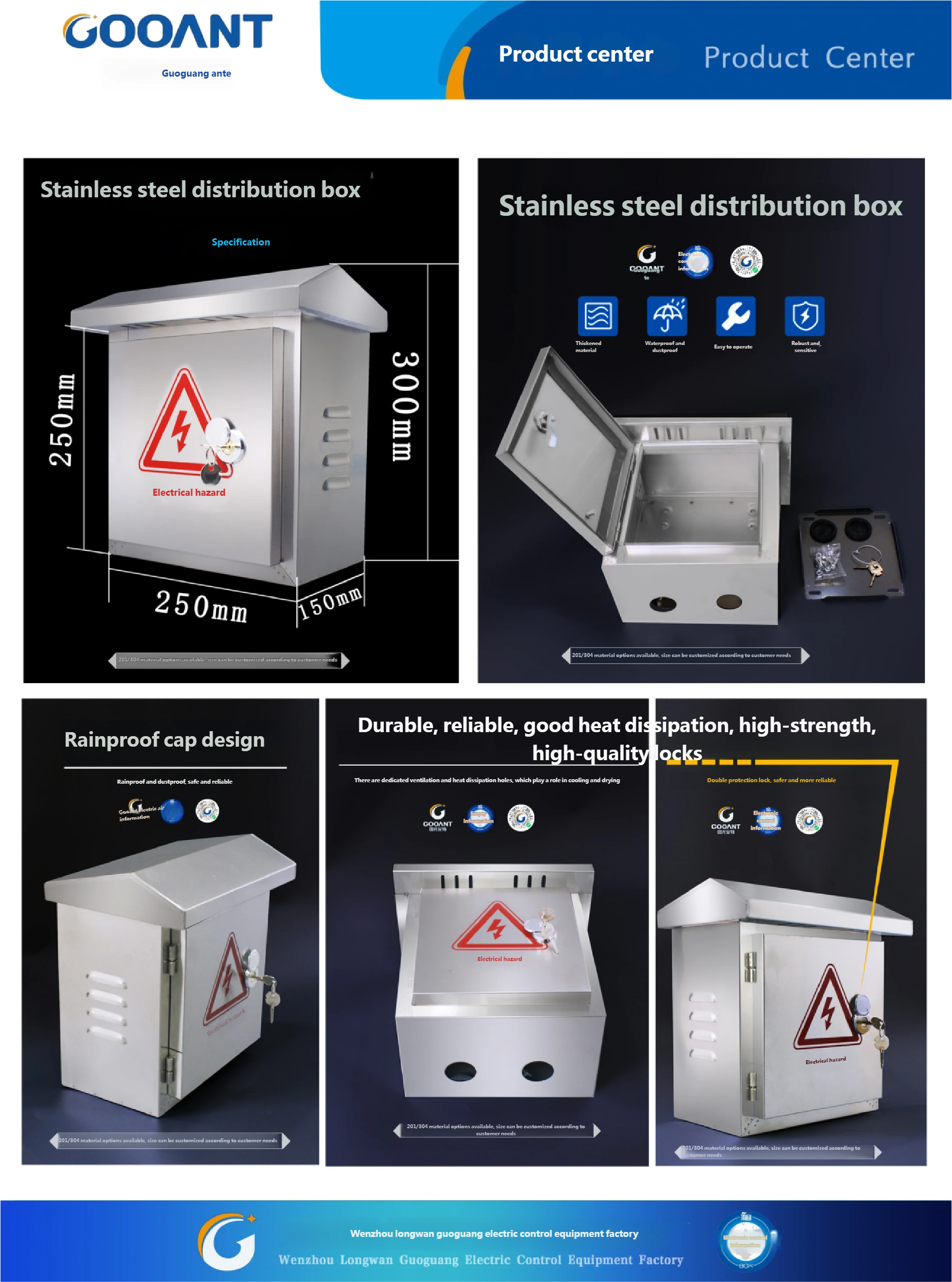
What Is an Electrical Control Box? Definition, Core Functions, and Industrial Role
An electrical control box is an enclosed housing unit that contains critical components for managing and directing electrical power in industrial and commercial systems. Its core functions include power distribution—safely routing electricity to machinery—process control, where devices like relays or PLCs automate operations, and safety protection, using circuit breakers and grounding systems to prevent overloads, short circuits, and electric shock. By centralizing command functions, it enables operators to monitor, adjust, and troubleshoot equipment efficiently.
In industrial settings, the electrical control box serves as the nerve center for production lines, HVAC systems, and manufacturing equipment. It ensures consistent, reliable operation while reducing reliance on manual intervention—lowering human error and exposure risks. Consolidating wiring and components into a single, secure enclosure also simplifies maintenance, improves system transparency, and supports compliance with occupational safety standards across sectors including automotive, food processing, and energy generation.
Key Components Inside an Electrical Control Box
Power Distribution Elements: Main Circuit Breaker, Bus Bars, and Bonding Jumpers
The main circuit breaker acts as the primary safety switch, instantly interrupting power during overloads or short circuits to protect personnel and downstream equipment. Bus bars provide low-resistance pathways for distributing incoming power across the panel, minimizing voltage drop and thermal stress. Bonding jumpers ensure all conductive enclosure parts share a common ground reference, eliminating hazardous potential differences. Together, these elements form the foundational infrastructure for safe, efficient power management.
Control & Safety Hardware: PLCs, Relays, Terminal Blocks, and Safety Relays
Programmable Logic Controllers (PLCs) serve as the industrial control box’s brain—executing logic-based commands to coordinate machine sequences, timing, and interlocks. Relays amplify low-power control signals to switch higher-voltage or higher-current loads, while terminal blocks provide organized, secure connection points for field wiring. Safety relays—certified to ISO 13849-1 for performance level PL e or IEC 62061 for SIL 3—deliver redundant, fail-safe monitoring of emergency stops, light curtains, and safety gates. This hardware layer translates operational intent into precise, protected physical action.
Human-Machine Interface: Indicators, Pushbuttons, and HMI Integration
Status indicators—such as LED lights for “Run,” “Fault,” or “Power On”—offer immediate visual feedback on system state. Emergency stop pushbuttons, designed to meet ISO 13850 requirements for positive-opening contacts and red/yellow color coding, enable rapid, manual shutdown when needed. Integrated Human-Machine Interfaces (HMIs) unify these inputs and outputs with touchscreen displays, allowing operators to view real-time metrics, modify setpoints, access alarm logs, and initiate diagnostics. This interface layer strengthens situational awareness and accelerates response times without requiring deep technical expertise.
Electrical Control Box Enclosure Design: Ratings, Layout, and Environmental Protection
The enclosure of an electrical control box is engineered—not merely assembled—to withstand environmental hazards while supporting safe, long-term operation. Two standardized rating systems—NEMA and IP—quantify its ability to resist dust, moisture, corrosion, and mechanical impact. NEMA ratings (e.g., NEMA 4, NEMA 12) are widely used in North America and define suitability for specific applications such as indoor dusty environments or outdoor hose-down conditions. IP ratings (e.g., IP65, IP66), governed by the International Electrotechnical Commission (IEC), use a two-digit code: the first digit indicates solid-object ingress protection (0–6), and the second reflects liquid protection (0–8). For demanding industrial environments—including washdown areas or outdoor substations—a NEMA 4 or IP66-rated enclosure is commonly specified to ensure robust protection against water jets and airborne particulates.
NEMA and IP Ratings for Electrical Control Boxes Explained
NEMA ratings, developed by the National Electrical Manufacturers Association, classify enclosures based on application-specific performance criteria—such as resistance to ice, corrosion, or oil immersion—making them especially relevant for U.S.-based design and inspection. IP ratings follow IEC 60529 and offer globally recognized, test-validated benchmarks for ingress protection. For example, IP54 denotes limited dust ingress and protection against water splashes from any direction; IP66 adds full dust-tightness and resistance to powerful water jets. Selecting the appropriate rating isn’t optional—it directly impacts operational continuity, maintenance frequency, and compliance with facility safety policies.
Optimal Internal Layout Principles: Power Flow, Heat Management, and Service Access
A well-considered internal layout enhances reliability, simplifies troubleshooting, and extends component life. Power flow should follow a top-to-bottom hierarchy: high-amperage devices like main breakers and bus bars are mounted at the top, while lower-power control devices—including PLCs and terminal blocks—are placed below to minimize electromagnetic interference and improve wire routing. Heat-generating components—such as variable-frequency drives (VFDs) or power supplies—must be positioned near ventilation paths or cooling fans, with adequate spacing from temperature-sensitive electronics like HMIs or signal conditioners. Finally, service access requires minimum working clearances per NEC Article 110.26—typically 30 inches wide and 36 inches deep—and unobstructed access to terminals and disconnects without removing adjacent hardware. Applying these principles reduces thermal stress, cuts commissioning time, and lowers long-term maintenance costs.
Safety, Compliance, and Risk Mitigation for Electrical Control Boxes
Electrical control boxes must adhere to rigorous safety protocols to safeguard personnel, equipment, and facility integrity. Noncompliance increases exposure to arc flash, shock, fire, and unplanned downtime—risks mitigated through adherence to nationally recognized standards and disciplined procedural practices. Foundational safeguards include arc flash hazard analysis, lockout/tagout (LOTO) enforcement, and third-party certification to UL 508A—the benchmark standard for industrial control panel construction in North America.
Arc Flash Prevention, Lockout/Tagout (LOTO), and NEC/UL Standards
Arc flash incidents release explosive energy capable of causing catastrophic injury or equipment destruction. Prevention begins at the design stage: every control box must display a clearly legible arc flash label per NEC Article 110.16, showing incident energy level (cal/cm²), working distance, and required PPE category. This label presumes the panel has been evaluated for short-circuit current rating (SCCR) and coordinated with upstream protective devices—often using current-limiting fuses or breakers to reduce let-through energy. LOTO procedures, mandated by OSHA 1910.147, require authorized personnel to isolate all energy sources—including control power—and verify zero energy before accessing live parts. A single padlock and tag applied to the main disconnect is insufficient if auxiliary power feeds exist; each source must be individually locked out. UL 508A certification confirms not only proper component selection and wiring methods but also validation of SCCR, conductor sizing, and labeling accuracy—ensuring the panel meets both performance and safety expectations before installation.
FAQ
What is the primary function of an electrical control box?
An electrical control box manages and directs electrical power through functions like power distribution, process control, and safety protection in industrial and commercial systems.
What are common components found in an electrical control box?
Common components include main circuit breakers, bus bars, PLCs, relays, terminal blocks, safety relays, status indicators, and HMIs for human-machine interaction.
What determines the enclosure durability of a control box?
The durability of a control box's enclosure is determined by its NEMA or IP rating, which measures resistance to dust, moisture, and mechanical impacts.
How can arc flash risks be minimized in control boxes?
Arc flash risks can be minimized through arc flash labeling, short-circuit current rating evaluations, and coordination with upstream protective devices.
Why is proper internal layout important in electrical control boxes?
Proper internal layout improves reliability, simplifies maintenance, and optimizes power flow while minimizing electromagnetic interference and heat buildup.
Table of Contents
- What Is an Electrical Control Box? Definition, Core Functions, and Industrial Role
- Key Components Inside an Electrical Control Box
- Electrical Control Box Enclosure Design: Ratings, Layout, and Environmental Protection
- Safety, Compliance, and Risk Mitigation for Electrical Control Boxes
-
FAQ
- What is the primary function of an electrical control box?
- What are common components found in an electrical control box?
- What determines the enclosure durability of a control box?
- How can arc flash risks be minimized in control boxes?
- Why is proper internal layout important in electrical control boxes?