 EN

Galvanized Sheet Metallurgy and Sacrificial Corrosion Protection
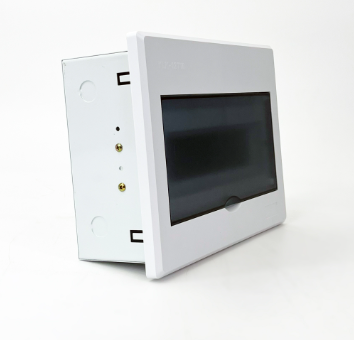
Cutting corners on enclosure sheet metal is one of the most expensive mistakes a project manager can make during electrical procurement. A standard cold-rolled steel box painted with a thin coat of alkyd enamel looks completely fine on the day of commissioning, yet a single scratch from an electrician's screwdriver during cable pulling exposes bare iron to ambient humidity. Within months, under-film rust creeps outward from knockouts and door hinges, eventually freezing latches and dropping conductive oxide flakes onto live circuit breakers below. Specifying a heavy-gauge galvanized sheet distribution board stops this structural decay before it starts. Manufactured in accordance with ASTM A653 hot-dip zinc-coating specifications, galvanized steel bonds a metallurgical layer of zinc directly onto the carbon steel core. Even if a field installer drills an extra conduit hole or scrapes a mounting flange against a masonry wall, the surrounding zinc acts as a sacrificial anode, corroding preferentially to shield the exposed steel cut edge from red rust. Pairing that zinc-coated substrate with electrostatic thermosetting powder coating creates a dual-layer barrier that survives damp basements, semi-outdoor loading docks, and coastal utility rooms without needing costly cabinet replacements five years down the road.
Internal Thermal Dissipation and Busbar Sizing Economics
Long-term savings inside an electrical enclosure go far beyond rust prevention on the outer shell; internal heat management directly dictates how long miniature circuit breakers, residual current devices, and contactors survive. Every amp flowing through a cramped, poorly ventilated panel generates resistive Joule heating across terminal screws and copper busbars. When internal ambient temperatures climb above forty degrees Celsius, thermal-magnetic breakers experience nuisance tripping at currents well below their nominal ratings, halting commercial operations or industrial machinery unexpectedly. Optimizing the internal layout cuts both wasted kilowatt-hours and premature breaker replacements through three engineering practices:
-
Generous wiring bending radii and gutter volume: Sizing the sheet-metal enclosure with ample top, bottom, and side wireways prevents tightly bundled polyvinyl chloride cables from trapping radiant heat around breaker trip units while speeding up initial installation labor.
-
High-purity tin-plated copper busbar assemblies: Using full-cross-section electrolytic copper busbars rather than undersized brass alloys minimizes contact resistance at branch connections, keeping temperature rise strictly within IEC 61439-3 and GB/T 7251.3 low-voltage switchgear limits.
-
Modular DIN-rail spacing with spare ways: Leaving twenty to thirty percent spare module capacity on the DIN rails allows facility electricians to add future branch circuits in minutes without ripping the entire box off the wall.
Lifecycle Cost Comparison Across Enclosure Substrates
Evaluating electrical distribution hardware requires weighing initial sheet-metal pricing against multi-year maintenance hours, corrosion resistance, and mechanical impact strength.
| Enclosure Substrate Type | Cut-Edge Rust Protection | Mechanical Impact Rigidity | Grounding Continuity Performance | Long-Term Maintenance Profile |
|---|---|---|---|---|
| Hot-Dip Galvanized Steel Sheet | High, sacrificial zinc protects punched knockouts | Excellent structural resistance to denting | Superior metal-to-metal chassis bonding | Minimal, resists peeling in humid utility rooms |
| Standard Cold-Rolled Painted Steel | Low, rust spreads rapidly from scratched edges | High initial strength until rust thins walls | Requires scraping paint under ground lugs | Frequent repainting or full cabinet replacement |
| Molded Polycarbonate or ABS Plastic | Immune to rust, prone to UV embrittlement | Moderate, cracks under heavy conduit torque | Zero inherent shielding, requires internal ground bars | Brittle hinges and yellowed covers in sunlit areas |
The engineering comparison above highlights an important electromechanical advantage of galvanized steel over non-metallic plastic boxes: a continuous zinc-coated steel chassis provides natural electromagnetic shielding and reliable equipotential bonding across mounting plates and hinged doors without needing complex auxiliary grounding straps at every corner.
Field Lessons from a Houston Commercial Logistics Hub Retrofit
Ignoring ambient humidity and wiring space quickly turns a low-bid electrical installation into a recurring operational headache. During an electrical reliability audit at a multi-bay cold-storage and logistics distribution center near Houston, facility engineers investigated frequent afternoon breaker trips and corroded panel doors across eighteen loading-dock sub-panels. The original contractor had installed thin-gauge cold-rolled steel boxes that were barely large enough to hold the required twenty-four branch circuits. When field electricians pulled heavy feeder cables through the top knockouts, the sharp punch edges scraped away the thin paint layer. Warm, humid Gulf Coast air condensing against the cool warehouse walls rusted the knockout rings within two summers, while tightly jammed phase wires inside the undersized gutters pushed internal cabinet temperatures past fifty-five degrees Celsius. Replacing those cramped, rusted boxes with spacious, heavy-gauge galvanized steel enclosures transformed facility uptime. The precision-stamped galvanized knockouts resisted coastal moisture even around raw field-punched holes, and the expanded gutter volume dropped internal operating temperatures by twelve degrees, eliminating nuisance thermal trips during peak summer loading shifts.
Application Boundaries and Sourcing Reliable Electrical Enclosures
Honest electrical specification requires matching the enclosure build to the exact environmental hazard. While galvanized steel sheets with powder-coated finishes handle the vast majority of commercial buildings, residential complexes, municipal infrastructure, and general factory floors, extreme chemical washdown zones exposed to direct hydrochloric acid splashes still require specialized stainless steel purged cabinets. For mainstream power distribution, lighting control, and machinery sub-metering, combining precision CNC punching, uniform zinc coating, and strict dimensional tolerances delivers the lowest total cost of ownership.
For electrical contractors, MEP engineering firms, and wholesale distributors seeking dependable enclosure hardware, Guoguang brings over two decades of specialized manufacturing experience in galvanized sheet distribution boxes. Operating under strict ISO 9001 quality management systems and national GB testing standards with advanced production equipment, the factory delivers durable, precision-engineered power distribution solutions built to safeguard electrical networks over decades of service.
Table of Contents
- Galvanized Sheet Metallurgy and Sacrificial Corrosion Protection
- Internal Thermal Dissipation and Busbar Sizing Economics
- Lifecycle Cost Comparison Across Enclosure Substrates
- Field Lessons from a Houston Commercial Logistics Hub Retrofit
- Application Boundaries and Sourcing Reliable Electrical Enclosures