EN
EN

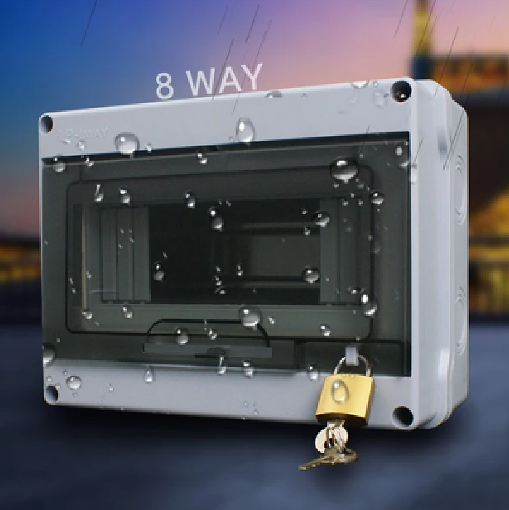
IP68-Rated Resilience: Deploying Outdoor Waterproof Boxes in Extreme Environments
Underwater sensor housing and submersion-ready deployments (marine, irrigation, flood monitoring)
An IP68-rated outdoor waterproof box delivers the highest level of dust and water ingress protection under IEC 60529—certified for continuous submersion beyond one meter, with exact depth and duration defined by the manufacturer. This makes it uniquely suited for marine sensor housings, where saltwater exposure, biofouling, and hydrostatic pressure demand fail-safe sealing. In irrigation systems, these enclosures protect controllers, flow meters, and solenoid drivers from saturated soil, direct spray, and chemical runoff. For flood monitoring networks, they keep telemetry units, water level sensors, and battery systems operational during prolonged immersion—significantly reducing failure risks from short circuits, electrolytic corrosion, or condensation-induced arcing.
Critical to maintaining this protection is proper cable entry: IP68-rated glands must be used to preserve continuity of the seal; without them, even a certified enclosure can compromise. Design considerations also include pressure-equalizing venting membranes (e.g., Gore® Vents) to prevent internal condensation while resisting water ingress, and double-seal strategies such as molded gaskets combined with conformal coating or potting of PCBs. Typical materials include UV-stabilized polycarbonate for impact resistance and optical clarity—or marine-grade aluminum for superior thermal dissipation and EMI shielding. By selecting an outdoor waterproof box validated to IP68, engineers ensure long-term reliability across aquatic applications where failure is not an option.
Reliable operation in solar farms, coastal infrastructure, and landscape lighting systems
IP68-rated enclosures also excel where environmental stressors compound—dust, humidity, UV radiation, thermal cycling, and mechanical vibration. In utility-scale solar farms, they house power optimizers, combiner boxes, and SCADA gateways exposed to intense UV, diurnal temperature swings from –40°C to +85°C, and wind-driven particulates. Coastal infrastructure—including navigation beacons, tide gauges, and offshore weather stations—relies on corrosion-resistant alloys, stainless-steel hardware, and sealed M12 or IP68-rated connectors to withstand salt-laden air and high-wind loading. Landscape lighting systems benefit similarly: low-voltage transformers, dimming modules, and DMX controllers remain protected from rain, sprinkler overspray, and ground moisture—even when buried or mounted at grade.
Vibration tolerance—validated per IEC 60068-2-6—is essential for installations near heavy machinery or on tall poles subject to resonant sway. Pre-certified designs that meet both IP68 and IEC 60529 standards provide assurance of sustained performance over decades. This resilience directly reduces lifecycle maintenance costs and prevents unplanned downtime in mission-critical assets.
Smart Integration: Enabling Real-Time Monitoring and Adaptive Control
The modern outdoor waterproof box has evolved beyond passive protection into an intelligent edge node—integrating IoT sensors, wireless communication modules, and local processing to enable real-time data collection, analysis, and autonomous response. When deployed with purpose-built thermal management, EMI shielding, and antenna-integrated housings, it transforms harsh-environment infrastructure into responsive, data-driven systems.
Edge-computing readiness: Hosting LoRaWAN gateways, Wi‑Fi 6E modules, and environmental sensors
Outdoor waterproof boxes engineered for edge computing balance three core requirements: uninterrupted ingress protection, stable thermal regulation, and reliable RF performance. Key deployments include:
- LoRaWAN gateways, aggregating data from dozens of low-power field sensors across kilometers—ideal for distributed flood or soil-moisture monitoring.
- Wi‑Fi 6E modules, supporting high-bandwidth, low-latency local networks for HD video streaming, AI-based visual analytics, or synchronized control of distributed actuators.
- Multi-parameter environmental sensors, delivering continuous streams of temperature, humidity, vibration, barometric pressure, and PM2.5 data to on-board processors.
These enclosures maintain IP68 integrity while accommodating RF-transparent windows, shielded antenna feedthroughs, and passive or fan-assisted thermal dissipation. Their ability to operate reliably in submerged, coastal, or desert conditions means a single certified design can serve diverse edge use cases—from underwater camera nodes to rooftop solar telemetry hubs—without sacrificing connectivity or compute fidelity.
Use cases in predictive maintenance and autonomous system feedback loops
Predictive maintenance depends on localized, time-synchronized sensor data to identify subtle anomalies before failure occurs. The outdoor waterproof box hosts the embedded logic that performs real-time FFT analysis on vibration signals, monitors current harmonics in motor drives, or tracks thermal gradients across circuit boards—triggering alerts only upon statistically significant deviations. For example, a vibration sensor inside an irrigation pump’s IP68 enclosure can detect early-stage bearing wear weeks before catastrophic failure, enabling replacement during scheduled maintenance rather than emergency response.
Autonomous feedback loops extend this capability: the same enclosure may host a controller that adjusts system behavior in real time. In a smart solar farm, it could tilt panels based on live pyranometer and sun-angle inputs—or throttle charge rates when battery temperature exceeds safe thresholds. These closed-loop decisions occur in milliseconds, eliminating cloud latency and improving energy yield, equipment longevity, and grid responsiveness. Combined with rugged physical protection, this edge intelligence makes the outdoor waterproof box a foundational enabler of Industry 4.0 in outdoor industrial environments.
Modular Customization: Adapting the Outdoor Waterproof Box to Evolving Industrial Needs
Industrial infrastructure demands flexibility—not obsolescence. Modern outdoor waterproof boxes embrace modular design principles: standardized mounting rails, interchangeable compartment inserts, tool-less access panels, and scalable power/data backplanes. This allows facilities to upgrade functionality incrementally—adding sensor arrays, cellular modems, or DIN-rail-mounted PLCs—without replacing the entire enclosure.
A water treatment plant, for instance, might begin with a basic control box housing a programmable relay, then years later integrate turbidity and chlorine sensors alongside LTE-M connectivity—all within the same certified housing. Similarly, a municipal streetlight network can evolve from simple photocell control to adaptive dimming, EV charging coordination, and air quality monitoring using the same base enclosure platform.
This modularity cuts total cost of ownership: fewer full replacements, minimal retrofit downtime, and extended service life for critical infrastructure. It shifts the outdoor waterproof box from a static protective shell to a future-ready, software-defined hardware platform.
Cross-Industry Expansion: From Telecom Enclosures to Energy and Smart Security Infrastructure
5G small-cell housing, EV charging station control units, and perimeter security sensor hubs
Once confined to telecom cabinets and junction boxes, the outdoor waterproof box now serves as foundational infrastructure across energy, mobility, and security sectors. In dense 5G deployments, it houses small-cell radios and baseband units at street level—providing weatherproof, thermally managed, and RF-optimized containment for millimeter-wave equipment while supporting rapid urban densification.
EV charging infrastructure relies equally on its robustness: control units managing power delivery, billing interfaces, OCPP connectivity, and safety interlocks require IP68 protection against rain, dust, vehicle splash, and thermal extremes. Likewise, perimeter security systems deploy these enclosures as sensor hubs—integrating PIR motion detectors, radar-based intrusion sensors, PTZ cameras, and on-board AI inference engines to deliver all-weather, 24/7 situational awareness across industrial perimeters, campuses, or border zones.
This cross-industry adoption reflects a broader shift toward standardized, certifiable hardware platforms—reducing integration risk, accelerating deployment, and lowering long-term TCO. As edge intelligence and environmental resilience converge, the outdoor waterproof box has become indispensable infrastructure—not just for protection, but for progress.
Frequently Asked Questions (FAQs)
What does IP68 certification mean for outdoor waterproof boxes?
IP68 certification ensures the box is protected against total dust ingress and can withstand continuous water submersion beyond one meter, with specific depth and duration defined by the manufacturer.
What are common materials used in IP68-rated enclosures?
Common materials include UV-stabilized polycarbonate for impact resistance, marine-grade aluminum for thermal dissipation and EMI shielding, and corrosion-resistant alloys for long-term durability in harsh environments.
Can outdoor waterproof boxes support IoT and edge computing applications?
Yes, modern designs integrate IoT sensors, wireless communication modules, and even edge computing capabilities while maintaining ingress protection and thermal regulation.
What industries benefit most from IP68-rated outdoor waterproof boxes?
Industries such as marine, solar farms, irrigation, telecom, EV charging, and smart security systems significantly benefit from their robust protection and adaptability to environmental conditions.
How does modular design enhance the utility of outdoor waterproof boxes?
Modular design allows for incremental upgrades, such as adding sensors or cellular connectivity, without replacing the enclosure. This reduces operational costs and extends the infrastructure's lifespan.
Table of Contents
- IP68-Rated Resilience: Deploying Outdoor Waterproof Boxes in Extreme Environments
- Smart Integration: Enabling Real-Time Monitoring and Adaptive Control
- Modular Customization: Adapting the Outdoor Waterproof Box to Evolving Industrial Needs
- Cross-Industry Expansion: From Telecom Enclosures to Energy and Smart Security Infrastructure
-
Frequently Asked Questions (FAQs)
- What does IP68 certification mean for outdoor waterproof boxes?
- What are common materials used in IP68-rated enclosures?
- Can outdoor waterproof boxes support IoT and edge computing applications?
- What industries benefit most from IP68-rated outdoor waterproof boxes?
- How does modular design enhance the utility of outdoor waterproof boxes?