EN
EN

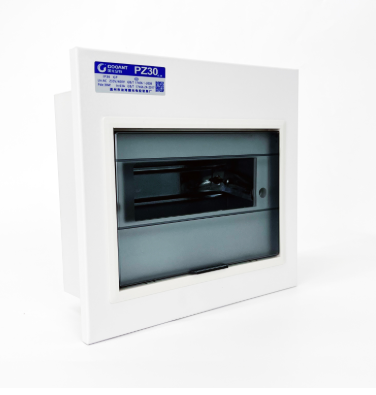
Panel Type, Amperage, and Circuit Capacity: Core Drivers of Breaker Box Replacement Cost
How Amperage Rating (100A vs. 200A vs. 400A) Directly Shapes Pricing
Amperage rating is the single strongest determinant of breaker box replacement cost. While the National Electrical Code (NEC) sets a residential minimum of 100 amps, many older homes still rely on outdated 60-amp panels—insufficient for today’s electrical demands, including EV chargers, heat pumps, and high-wattage appliances. Upgrading to a 200-amp service is the most common modernization path, balancing capacity and cost-effectiveness. A 100-amp panel replacement typically runs $800–$1,500; a 200-amp upgrade ranges from $1,500–$3,000; and a 400-amp heavy-up for large or energy-intensive homes often exceeds $4,000. The main breaker alone—a critical, code-mandated component—adds $500–$2,000 to the total (NerdWallet 2023). Higher amperage necessitates heavier-gauge service entrance cable, a larger meter socket, and a physically bigger panel with more breaker slots, all driving up both material and labor expenses. As a result, cost scales predictably with amperage capacity.
Main Panel vs. Subpanel Replacement: Structural, Code, and Labor Implications
Replacing a main service panel is fundamentally different—and significantly more expensive—than installing or replacing a subpanel. A main panel upgrade requires coordination with the utility company for a temporary service disconnect, often includes meter socket replacement ($100–$650), and must comply with current NEC grounding and bonding requirements. Routing new service entrance conductors, mounting a larger enclosure, and verifying system-wide continuity can consume half a day or more of skilled labor. In contrast, a subpanel replacement—commonly located in garages, workshops, or home additions—typically costs $400–$2,000. Its lower price reflects simpler wiring, no utility involvement, and fewer mandatory code upgrades. However, if the existing main panel lacks sufficient capacity or available spaces to feed a new subpanel, the project escalates into a full service upgrade—blending both scopes and substantially increasing overall cost.
Home Age, Panel Condition, and Wiring Integrity: Hidden Cost Escalators
Older homes often harbor concealed electrical deficiencies that dramatically inflate the final price of a panel upgrade. Smart homeowners anticipate these hidden escalators—not as surprises, but as essential safety investments—before work begins.
Outdated Panels (FPE, Zinsco, Challenger) Trigger Mandatory Replacement and Premium Fees
Panels manufactured by Federal Pacific Electric (FPE), Zinsco, and Challenger are widely recognized fire hazards due to documented failures in breaker trip mechanisms and degraded bus bars. Many insurers refuse coverage for homes using these panels, and licensed electricians are ethically and often legally obligated to recommend full replacement upon discovery. This isn’t optional maintenance—it’s a non-negotiable safety intervention. Because it requires full service disconnect, enhanced safety protocols, and frequently includes meter upgrades, replacement carries a 20–30% premium over standard swaps. For example, upgrading a recalled 100-amp FPE panel to a modern 200-amp unit in a mid-century home averages $3,500–$5,000—nearly double the $1,500–$3,000 cost of replacing a compliant panel of equal amperage. Even panels without visible damage pose serious arc-fault risks. In areas with strict enforcement, expect an additional $500–$1,200 for NEC-mandated upgrades like enhanced grounding and arc-fault circuit interrupters (AFCIs).
Degraded Wiring or Insufficient Grounding Often Requires Concurrent Upgrades
The panel is only the central hub—not the entire system. In homes built before the 1980s, electricians routinely uncover hazardous conditions: cloth-insulated wiring, aluminum branch circuits, missing or undersized grounding, or obsolete knob-and-tube systems. Bringing these elements up to current NEC standards isn’t optional—it’s required for utility approval and long-term safety. Replacing a few compromised circuits may cost $2,000–$4,000, while a full-home rewire in older structures can exceed $8,000. Inadequate grounding—such as reliance on a single ground rod or improper neutral-to-ground bonding—must be corrected before inspection, adding $800–$2,500. Knob-and-tube wiring triggers the most aggressive remediation: insurers often mandate complete removal, pushing total project costs to $10,000 or more. Budgeting an extra 30–50% beyond the base panel quote for wiring remediation is a prudent, evidence-based strategy—especially in historic districts where aging infrastructure is the norm.
Labor, Location, and Regulatory Compliance: External Multipliers on Breaker Box Replacement Cost
Regional Labor Rates and Market Demand Influence Base Installation Fees
Electrician hourly rates vary significantly by geography and market conditions—directly shaping labor costs for panel replacement. In high-cost urban markets, licensed professionals commonly charge $100–$150/hour; in rural areas, rates often fall between $50–$85. Yet strong local demand—driven by new construction, post-storm repairs, or regional remodeling booms—can elevate prices even in traditionally affordable regions. A complex 100- to 200-amp upgrade requiring a full day of labor may therefore incur $800–$2,500 in labor alone. Market saturation also matters: areas with limited access to certified, bonded electricians tend to see service premiums. For this reason, obtaining at least three detailed, itemized quotes—preferably from contractors with proven experience in service upgrades—is essential before proceeding.
Permitting, Inspection, and NEC Compliance Add Predictable but Variable Overhead
Electrical permits are nearly universal for panel replacements, with fees ranging from $50–$300 depending on scope and jurisdiction. A mandatory inspection follows to verify compliance with the National Electrical Code (NEC), and any deficiencies—such as missing AFCI protection, outdated grounding, or improper bonding—must be corrected before approval. The 2023 NEC update expanded AFCI requirements across living areas, kitchens, and laundry rooms, potentially adding $200–$600 if the new panel must support additional protected circuits. These compliance costs are predictable once scope is defined—but they vary by municipality. Working with a contractor who handles permitting end-to-end minimizes delays and ensures documentation aligns with local interpretations of code—reducing risk of costly rework.
Repair vs. Replacement: When Breaker Box Replacement Cost Justifies Full Upgrade
A tripped breaker or flickering light doesn’t always mean the panel is failing—but it is a signal to assess its condition. An experienced electrician can often resolve isolated issues—like replacing a faulty breaker or cleaning corroded bus bars—for $300–$800. But when a panel shows burn marks, lacks space for new circuits, belongs to a discontinued or recalled brand (e.g., FPE, Zinsco), or has internal components rated only for 60°C insulation, repair is merely a stopgap. At that point, the upfront cost of a full 200-amp replacement—typically $2,500–$4,000 (HomeAdvisor, 2024)—must be weighed against escalating emergency calls, rising insurance premiums, and growing fire risk. Modern panels integrate arc-fault (AFCI) and ground-fault (GFCI) protection that legacy systems simply cannot replicate. Overheating lugs, double-tapped connections, or brittle insulation aren’t just symptoms—they’re warnings. Informed decisions hinge not on age alone, but on present condition, documented hazards, and the long-term cost of operating with constrained, unsafe capacity.
Table of Contents
- Panel Type, Amperage, and Circuit Capacity: Core Drivers of Breaker Box Replacement Cost
- Home Age, Panel Condition, and Wiring Integrity: Hidden Cost Escalators
- Labor, Location, and Regulatory Compliance: External Multipliers on Breaker Box Replacement Cost
- Repair vs. Replacement: When Breaker Box Replacement Cost Justifies Full Upgrade