EN
EN

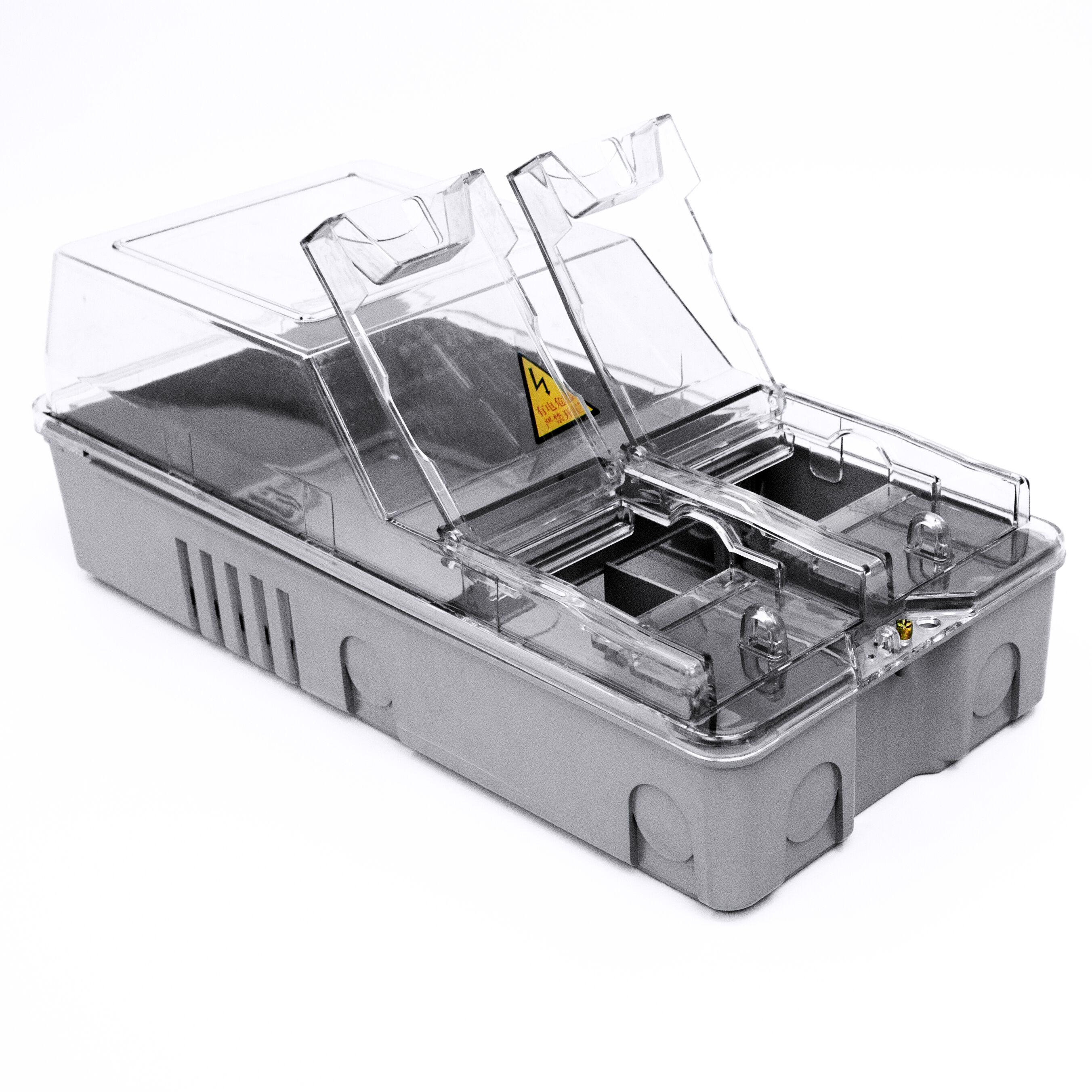
Motor Terminal Box Configuration and Visual Integrity Checks
Proper configuration and visual inspection of the motor terminal box form the cornerstone of preventative maintenance programs. Ensuring correct installation alignment prevents operational failures down the line.
Verifying rotation tag alignment and drive-end orientation
Confirm that the rotation arrow tag is clearly visible and accurately indicates the motor’s rotational direction. Misalignment risks improper coupling installation or inadvertent reverse operation—both sources of mechanical stress and premature wear. Simultaneously, verify the terminal box is positioned per manufacturer specifications relative to the drive-end shaft. Standard placement ensures safe, unobstructed access during maintenance while avoiding interference with driven equipment. Incorrect positioning increases the risk of accidental contact during operation and complicates routine connection checks.
Inspecting gasket integrity, cover fit, grounding lugs, and nameplate legibility
A comprehensive visual inspection must assess four key physical elements:
- Gasket: Check for cracks, compression set, or chemical degradation that could compromise the enclosure’s Ingress Protection (IP) rating.
- Cover fit: Ensure it sits flush without warping—minor distortion can allow moisture or contaminants to breach the seal.
- Grounding lugs: Confirm secure mechanical attachment and absence of corrosion; compromised grounding poses serious electrical safety hazards.
- Nameplate: Verify full legibility. This critical label contains voltage, full-load amps, insulation class, and other data essential for safe operation and future diagnostics.
A 2023 industrial safety audit found that nearly 30% of motor failures involved either degraded terminal box sealing or illegible identification tags—highlighting how foundational these checks are to reliability.
Electrical Connection Health: Preventing Arcing and Overheating in the Motor Terminal Box
Maintaining tight, corrosion-free electrical connections inside the motor terminal box is critical to preventing arcing and overheating. Loose or degraded terminal lugs increase contact resistance, generating localized heat that accelerates insulation breakdown and may culminate in catastrophic failure.
Torque validation and thermal cycling effects on terminal lug integrity
Terminal lug connections must be torqued to the manufacturer’s specification—ideally during every scheduled maintenance interval. Thermal cycling (repeated conductor expansion and contraction under load changes) gradually loosens hardware, reducing clamping force and elevating resistance. A single missed torque check after several cycles can raise contact resistance by over 30%, initiating a self-reinforcing hotspot. Verified torque values should be recorded and trended to detect degradation early. Use calibrated torque wrenches and follow the manufacturer’s recommended tightening sequence to ensure uniform pressure across all lugs.
Detecting fretting corrosion, micro-arcing, and loose connections via visual and infrared inspection
Visual inspection under good lighting reveals early warning signs: discolored insulation, blackened contact surfaces, or fine metallic dust near terminals—all hallmarks of fretting corrosion or micro-arcing. Complement this with infrared thermography performed while the motor operates under load. A temperature differential exceeding 5–10°C between similar-phase lugs signals a high-resistance connection requiring immediate re-torquing. When used together, these methods detect over 80% of incipient faults before they cause unplanned downtime. Quarterly inspections align with best practices for high-voltage systems where connection integrity directly impacts safety and uptime.
Environmental Protection: Sealing and IP Compliance for Motor Terminal Box Longevity
Assessing gasket condition, enclosure sealing, and IP rating alignment with operating environment
Robust environmental protection begins with verifying gasket condition—looking for cracks, compression loss, or chemical degradation—and confirming full sealing at all joints and conduit entries. Any breach invites moisture, dust, or corrosive agents into the enclosure. Crucially, the IP rating must match the actual operating environment: an IP55-rated box suits general indoor use but falls short near washdown zones or coastal sites, where IP66 or IP67 protection becomes essential. Facilities in particulate-heavy environments report up to 40% longer service life when upgrading to properly sealed IP67 terminal boxes. Consider these critical IP ratings:
| IP Rating | Protection Level | Suitable Environments |
|---|---|---|
| IP55 | Limited dust protection, low-pressure water jets | Indoor, controlled settings |
| IP65 | Dust-tight, water jets from any direction | Food processing, outdoor machinery |
| IP67 | Dust-tight, temporary immersion (30min @ 1m) | Marine applications, chemical plants, mining |
Periodically validate that sealing components and IP ratings remain aligned with evolving site conditions—especially after facility modifications or process changes—to prevent premature failure.
Proactive Electrical Health Monitoring of the Motor Terminal Box
Insulation resistance (megger) testing: baselines, trending, and temperature correction
Insulation resistance (megger) testing remains the frontline defense against winding failures. Establish a baseline reading on a clean, dry motor at a known temperature—ideally during commissioning or after a major rewind. Because insulation resistance decreases exponentially with rising temperature (a 10°C increase typically halves the value), all subsequent readings must be corrected to the baseline temperature using the IEEE 43 standard coefficient. Trending these corrected values reveals gradual degradation from moisture ingress, contamination, or insulation aging—often months before failure. Without temperature correction, seasonal variations can mask serious deterioration, turning a “passing” winter reading into a false sense of security.
Validating space heater operation and dew point control to prevent condensation
Condensation inside the terminal box is a leading cause of low insulation resistance—particularly in humid climates or following shutdowns. Space heaters maintain internal air temperature above the local dew point, inhibiting moisture formation. Routine validation must confirm:
- The heater activates reliably when the motor is de-energized,
- Its thermostat setpoint aligns with the site’s ambient dew point profile, and
- The heater element shows no signs of corrosion, open circuits, or thermal damage.
A failed heater can permit condensation to accumulate on terminal lugs and windings within hours—eroding insulation values faster than megger testing can detect. Integrating heater verification into quarterly electrical health checks closes a critical gap in moisture-related failure prevention.
FAQ
Why is gasket integrity important in motor terminal boxes?
Gasket integrity is crucial as it ensures the enclosure maintains its IP rating, protecting against moisture, dust, and contaminants that can lead to electrical failures or corrosion.
What’s the significance of torque validation?
Torque validation ensures correct clamping force on terminal lugs, preventing loose connections and reducing the risk of overheating or arcing caused by elevated contact resistance.
How can infrared inspection help detect faults?
Infrared inspection identifies temperature differentials among terminals, highlighting high-resistance connections and hotspots before they result in failures.
Why is IP rating alignment with the operating environment critical?
The IP rating determines the level of environmental protection the terminal box provides. Matching the rating to site conditions prevents contamination and extends service life.
How do space heaters prevent condensation in terminal boxes?
Space heaters keep the internal temperature above the local dew point, preventing moisture buildup that can degrade insulation and cause electrical faults.
Table of Contents
- Motor Terminal Box Configuration and Visual Integrity Checks
- Electrical Connection Health: Preventing Arcing and Overheating in the Motor Terminal Box
- Environmental Protection: Sealing and IP Compliance for Motor Terminal Box Longevity
- Proactive Electrical Health Monitoring of the Motor Terminal Box
- FAQ